
Sugar Hill Address History Sources
Different eras require different records. The strongest search for Sugar Hill previous residents starts with the present parcel and works back through deeds. Census film, newspapers, probate indexes, and permits then add people or events that a title chain cannot show. A residential reverse-directory run would help between census years, but no authoritative local publisher and year span was verified.
| Source | Years it covers | Where held | What it shows |
|---|---|---|---|
| Recorded deeds | Continuity stated from Sept. 26, 1871 | GSCCCA, clerk, older books at Archives | Legal ownership chain |
| Probate indexes | 1800s-1977; 1977-82; 1983-86; 1987-90 | Gwinnett Probate records | Estates and heirs tied to a deceased owner |
| Federal census film | 1820-1920, with 1890 missing | Gwinnett County Public Library | Households in census geography |
| Newspaper microfilm | Overlapping runs from 1871 | Gwinnett County Public Library | Obituaries, sales, moves, and local events |
| Residential reverse directories | Exact local run not verified | Ask GCPL reference staff | Listed subscriber or occupant, if a volume exists |
| Sugar Hill permits | Online start not stated | Planning map or records request | Project, owner, applicant, and contractor dates |
For a modern parcel, deeds come first. For a person who died while owning the land, probate may continue the transfer story. Before the deed run, surviving census, tax, court, newspaper, church, and cemetery sources become more important.
Trace Sugar Hill Past Residents
Begin with Gwinnett GIS and the assessor, not an old surname. Save the current owner, parcel ID, subdivision and lot, and full legal description. Then use the GSCCCA real-estate search or the Superior Court clerk counter to locate the acquisition deed. Names can recur across many parcels, while the land description keeps the search attached to the same site.
- Confirm the parcel and municipal jurisdiction in GIS. Save the PIN, mapped address, and legal description.
- Find the present owner's acquisition deed by party name or document reference. Record buyer, seller, date, book/page or instrument number, and prior-deed recital.
- Search that seller as an earlier buyer. Accept a match only when the legal description points to the same land.
- Repeat the seller-as-buyer loop. At the 1871 fire boundary, check clerk books and Georgia Archives catalog cards.
- Add probate, census, newspapers, and any confirmed directory evidence to identify households beyond title owners.
- Grantor
- The party transferring an interest in recorded land.
- Grantee
- The party receiving that interest.
- Chain of title
- The sequence of recorded transfers for the same land.
- Legal description
- The deed's durable land identity, such as land lot, district, subdivision lot, or metes and bounds.
GSCCCA web access carries a fee, but searching and viewing at the clerk's office is free. The exact earliest online date is not published. For proof, obtain the needed copy from the custodian rather than treating an index result as the deed itself.
Sugar Hill Previous Residents in Probate
When an owner dies, the transfer may pass through Gwinnett Probate Court. Public estate files can identify the decedent, petitioner or personal representative, case reference, filing dates, and sometimes heirs or mailing addresses. Select estate documents appear in re:SearchGA. Other open decedent-estate files require the court's Records Request Sheet and may take up to two business days to retrieve for review.
The Gwinnett Probate records page points to digitized index volumes covering the 1800s through 1977, followed by 1977-82, 1983-86, and 1987-90 sets. These indexes are especially useful when a deed stops at an estate, executor, or administrator. Copies cost $1 per page. A mail order follows the prior file request and needs a self-addressed stamped envelope plus check or money order.
Only open estate material belongs in this trail. Adoption files, sealed matters, and confidential guardianship detail are not assumed public. A probate name still must be matched to the parcel or owner through independent facts.
Sugar Hill Residents Before 1871
The Gwinnett courthouse burned in 1871 and destroyed most early records and deeds. The clerk dates current deed and land-record continuity from September 26 of that year. For previous residents of land settled earlier, the chain may reach a point where no direct recorded transfer survives.
That is a gap, not proof that all earlier evidence vanished. Search the Georgia Archives County Records Microfilm Index for scanned Gwinnett catalog cards and collateral series. Tax digests, later deed recitals, court and probate books, newspapers, church records, cemetery evidence, and family papers may identify an earlier owner or household. Archives warns that a courthouse disaster should never be read as total destruction.
The official Archives capture below preserves the county-card access point used when a deed chain reaches the fire boundary.
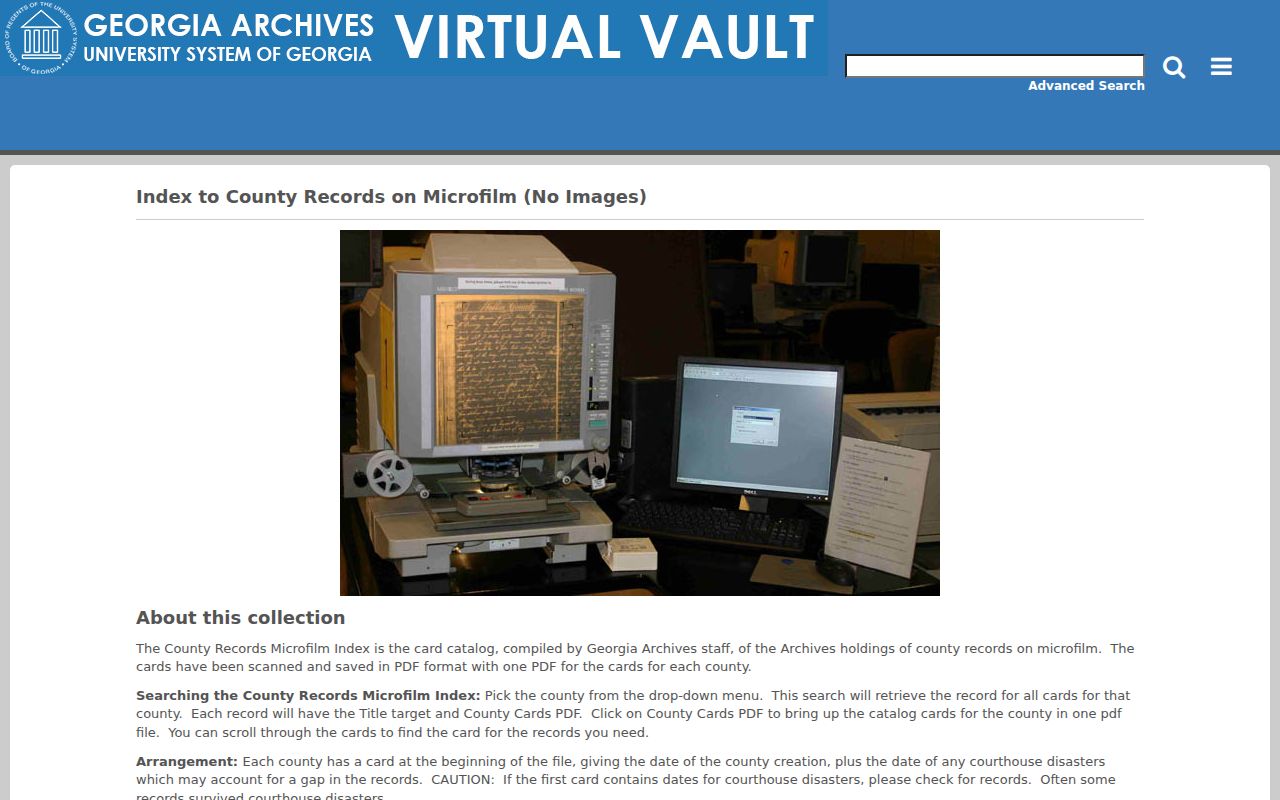
The cards describe surviving series and film rather than supplying a complete name search, so each useful entry leads to a second request.
Find Sugar Hill Past Residents
Deeds identify legal owners, not every person who lived at the site. To move from owners to previous residents, pair the ownership dates with household and news sources. GCPL holds Gwinnett census microfilm from 1820 through 1920, with the nationally missing 1890 census. Its newspaper runs overlap from 1871 forward and can supply obituaries, sale notices, family events, and moves.
- Build a date range from the deed transfers and permits.
- Search the nearest available census by household name and place, then inspect nearby image rows and geography.
- Ask GCPL whether an address-arranged or telephone directory exists for the years between censuses. Do not assume a volume.
- Search overlapping newspaper runs for the exact surname, street variant, subdivision, church, or cemetery.
- Record which source proves ownership and which only supports occupancy.
The full library collection context belongs on the Sugar Hill Directory Book page. For address history, use those sources only to bridge specific years in the parcel trail.
Sugar Hill Previous Residents Sources
GCPL digital resources extend the address search beyond courthouse material. HeritageQuest is available remotely through GALILEO with library credentials and includes indexed census material and family-history books. Ancestry Library Edition and FamilySearch access are available in the library. The digital list also points to the Digital Library of Georgia and newspaper databases.
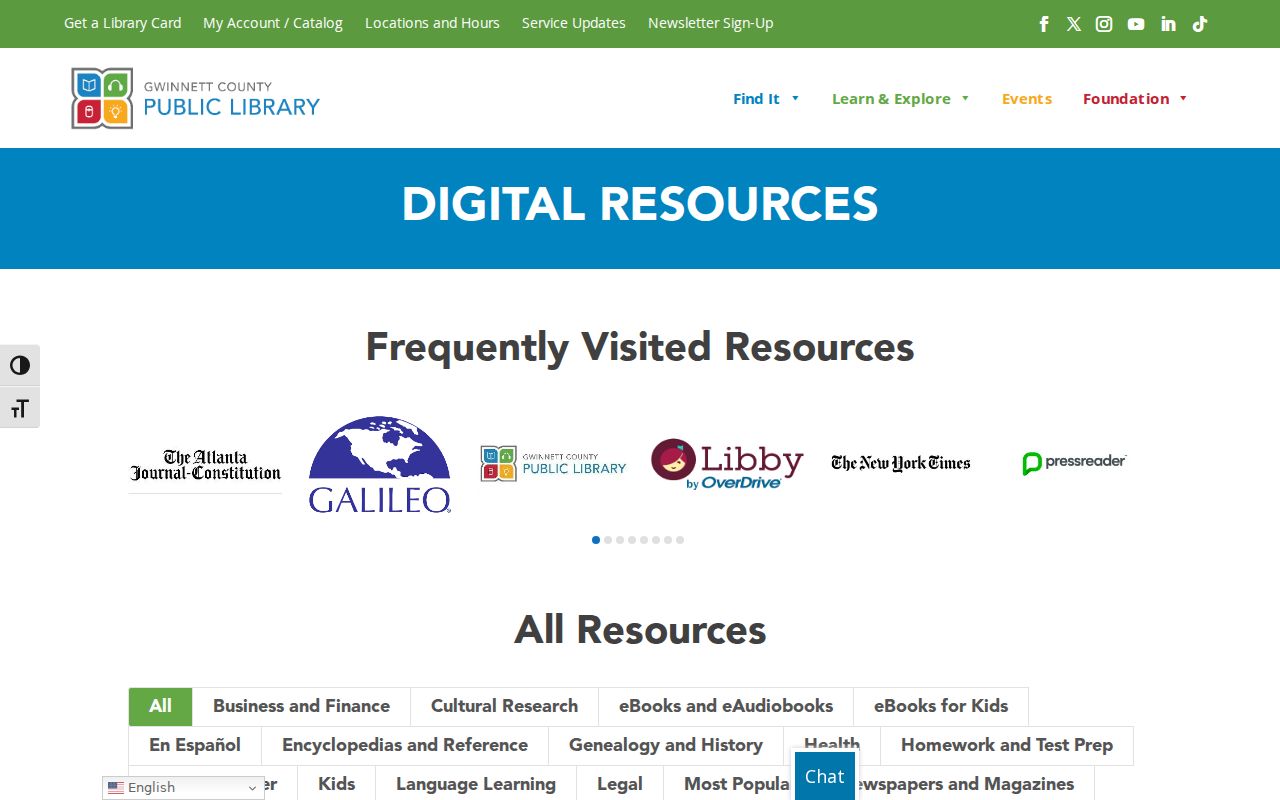
The captured library page shows the official starting point for resources that may connect a deed owner to a broader household record.
GCPL's microfilm reader can print, email, or save an image to a thumb drive. Researchers may book a librarian or submit an article and obituary request. The service is a practical fallback when optical character recognition misses initials, punctuation, or narrow newspaper columns.
Sugar Hill Resident Address Changes
Postal wording is less stable than the parcel. Sugar Hill lies in ZIP 30518, but that ZIP also covers Buford-named and unincorporated north Gwinnett geography. City limits intermix with unincorporated pockets. An older event may therefore be filed under Gwinnett County, Buford, a road, a church, or a local community name rather than Sugar Hill.
A verified Digital Library of Georgia government-directory example also shows why suffix checks matter. Editions identify the same official at a Sugar Hill address but disagree between "Windswept Trace" and "Windswept Terrace." That source is not a residential directory run, yet it proves that edition-to-edition wording can drift. Search both forms and validate the parcel.
No authoritative Sugar Hill street-renaming or renumbering chronology was found. There is also no verified Sugar Hill Sanborn sheet run. These missing sources should be stated plainly rather than replaced with an unofficial list.
Sugar Hill Resident Permit Clues
Sugar Hill permit and development files can place an owner, applicant, or contractor at a project on a certain date. The form may include subdivision, lot, block, suite, street, parcel, land lot, district, zoning, owner mailing details, applicant or agent, project type, value, dimensions, and signature. Such a file documents the project, not continuous residence.
The city does not publish a verified address-to-permit index. Use the Planning and Development map when it has the needed project, or send a narrow request through the Sugar Hill city clerk's open-records route. Ask for an existing permit register or named file within a date range. Georgia law does not require the city to make a new research report.
Sugar Hill states the usual three-business-day response rule, a ten-cent copy charge, and no labor charge for the first fifteen minutes. Requests go to the city clerk at City Hall, 5039 West Broad Street. County deeds and probate still belong to Gwinnett custodians in Lawrenceville.
Sugar Hill Previous Residents Offline
Online indexes are access layers, not the full record. The Gwinnett Clerk of Superior Court keeps deeds, liens, and plats. Its counter at 75 Langley Drive closes at 4:30 p.m. GSCCCA provides the online party and document index, while the office offers free searching and viewing. Certified copies and missing images come from the custodian.
For older work, move from the clerk to Georgia Archives cards and GCPL microfilm. Archives county film generally does not extend past 1900 unless a volume began earlier, though exceptions exist. FamilySearch may provide free-registration digitizations for Georgia, Gwinnett County through about 1900. GCPL then adds census, papers, licensed databases, and librarian research help.
This fallback chain prevents a blank portal result from becoming a false conclusion. Search spelling variants, record the exact date range tried, and give a clerk the parcel, legal description, names, and known document reference.
Use Sugar Hill Resident History Carefully
Previous residents research works well for family history, estate questions, architectural context, and a personal house chronology. It should distinguish a deed owner, a tax-mailing addressee, a permit applicant, and a person actually found in a household source. Those roles are not the same.
Modern addresses may be protected. Georgia's Safe at Home program began July 1, 2026 and offers approved participants a substitute public-record address, mail forwarding, and protected voter registration. A researcher must not use other records to reconstruct such a confidential location. Driver, utility, delivery, private association, and congregation member records are not public address directories.
Lawful use. Trace Sugar Hill previous residents for legitimate personal and historical purposes. Never use an address trail to stalk, harass, intimidate, or expose a living person.
Commercial compilation services can merge same-name people and stale addresses. Preserve the official source, page or image, record date, and custodian for each claim. When evidence conflicts, the certified or original record carries more weight than a compiled profile.